sonomono® Products


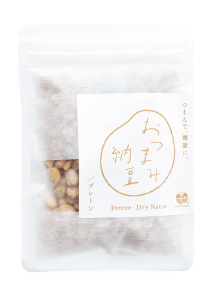
Sprinkle, mix, and enjoy!
Articles
Supervised by experts
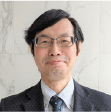
Kazuya Ogasawara

Emi Hidaka
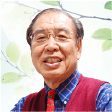
Sentaro Kimura
sonomono® Products
Sprinkle, mix, and enjoy!
Supervised by experts
Kazuya Ogasawara
Emi Hidaka
Sentaro Kimura
This time, I would like to talk about the history of modern natto manufacturing.
There is evidence of natto-selling activities in the Edo period. However, probably, stable production was not possible due to a lack of a standardized manufacturing method.
The modern natto manufacturing method was established in the Meiji and Taisho eras thanks to the achievements of the three great scientists.
In 1894 (Meiji 27), Dr.Yabe was the first microbiologist to isolate microorganisms from natto at Agricultural University (currently the University of Tokyo). He published a natto bacteria paper in the journal of the Chemical Society of Japan. Four types of bacteria were isolated at this time, and extra bacteria were also mixed.

Dr. Sawamura of Agricultural University was the first person to isolate natto as a single bacterium in 1905 (Meiji 38). He named it Bacillus natto SAWAMURA.
It was the first time someone completed a single natto bacterium fermentation.
Before Dr. Sawamura’s discovery, natto was manufactured using rice straws and often became spoiled.

Dr. Hanzawa of Sapporo Agricultural College (currently Hokkaido University) was the first to establish a modern hygienic manufacturing method.
In 1918 (Taisho 7), Dr. Hanzawa created the Hanzawa-style natto manufacturing method. Steamed soybeans were placed in a clean warp wood (thin wooden board) container and planted with pure cultured natto bacteria.
He also started the distribution of purely cultured natto bacteria (seed bacteria), manufactured natto, and sold it as “university natto”. There is a record that the first inoculum was spread in 1912 by Professor Shunsuke Muramatsu of Morioka Higher Agricultural and Forestry School (currently Iwate University).
Dr. Hanzawa was appointed as the first professor of the Applied Mycology Course in 1916. It was the first Applied Microbiology Course in Japan, contributing to the development of Applied Microbiology for a quarter of a century.
He was also the first Japanese to study abroad at the Pasteur Institute in France. Dr. Hanzawa lived a long and prolific life, passing away in 1972 at 94 years.
The foundations created by these three scientists have enabled the manufacturing of natto to be perfected over the last 100 years. Science and tradition converge in a food that is one of Japan’s culinary treasures.

Kazuya Ogasawara
Academic Advisor to sonomoto Inc. / Former Specially Appointed Associate Professor at Kyushu University Graduate School
Mr. Ogasawara graduated from Kumamoto University Graduate School of Medical Education. He actively researches and develops functional raw materials such as nattokinase. His professional experience as a researcher over more than 39 years includes microbiology, fermentation, enzymology, and bacterium.
Fit Keyaki 602, 2-16-6 Kego, Chuo Ward, Fukuoka, 810-0023, Japan
Customer support
Legal and Corporate Information
Ordering and Inquiries by Phone
Attention available only in Japanese.
Operating Hours: 9:00 AM to 5:00 PM(Closed on weekends and Japanese holidays)
For Media Coverage or Lecture Requests

Operating Hours: 1:00 PM to 5:00 PM (Weekdays only)※Click here for inquiries regarding business purposes.
Please input the required information and submit. We will respond from the next business day.