sonomono® Products


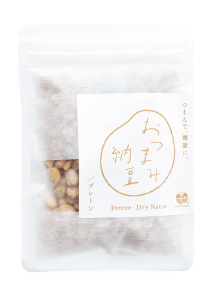
Sprinkle, mix, and enjoy!
Articles
Supervised by experts

Kazuya Ogasawara

Emi Hidaka

Sentaro Kimura
sonomono® Products
Sprinkle, mix, and enjoy!
Supervised by experts
Kazuya Ogasawara
Emi Hidaka
Sentaro Kimura
Our quality control begins with carefully managing every step of the process together with our producers and manufacturing partners, from using a clean-label approach with no unnecessary ingredients, to our commitment to Japanese-grown ingredients cultivated with reduced or no pesticides, and directly checking production and manufacturing sites. We conduct various screening tests, including non-GMO, pesticide residue, and radioactive material testing. Our products are manufactured in facilities with strict hygiene management systems based on HACCP and GMP standards. Through these efforts, we deliver quality that everyone, from babies to adults, can enjoy with peace of mind every day.
(※Test results are continuously updated with the latest available data.)
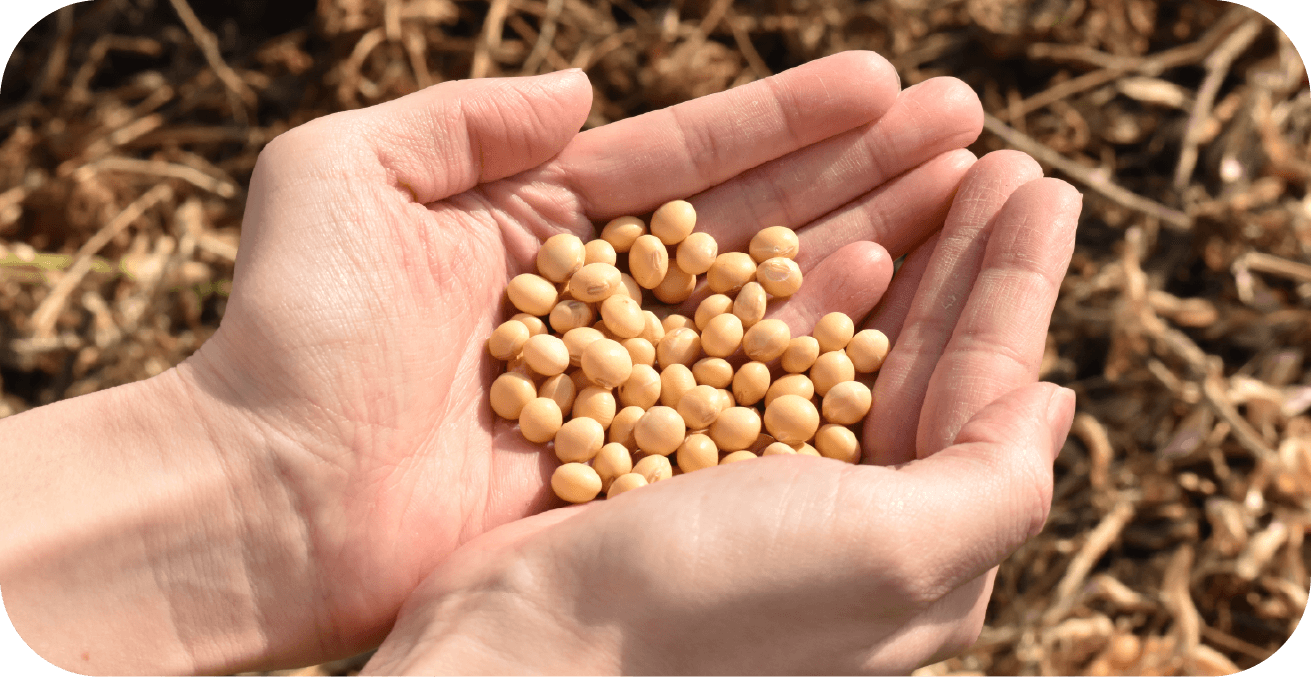
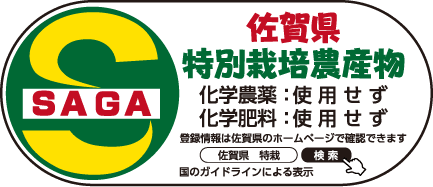
The soybeans used in the Sonomono Natto Bacteria series have received “Saga Prefecture Specially Cultivated Certification A,” meeting the strict standards independently established by Saga Prefecture.
This is the highest rank (Category A), awarded only to agricultural products grown without chemical pesticides or chemical fertilizers throughout the cultivation period. Because these soybeans are grown under thorough management while benefiting from the power of nature, they can be enjoyed safely every day by everyone, from young children to older adults.
| Analytical Test Items | Analysis Result | |
|---|---|---|
| Residual Pesticide Testing | FOODS_008 (268 items) Glyphosate Glufosinate Total: 270 items | Not detected |
| Test Item | Analysis Result | |
|---|---|---|
| Non-GMO Test | DNA sequences derived from genetically modified crops | Not detected |
The soybeans are produced by the Kohoku Town Organic Research Association.
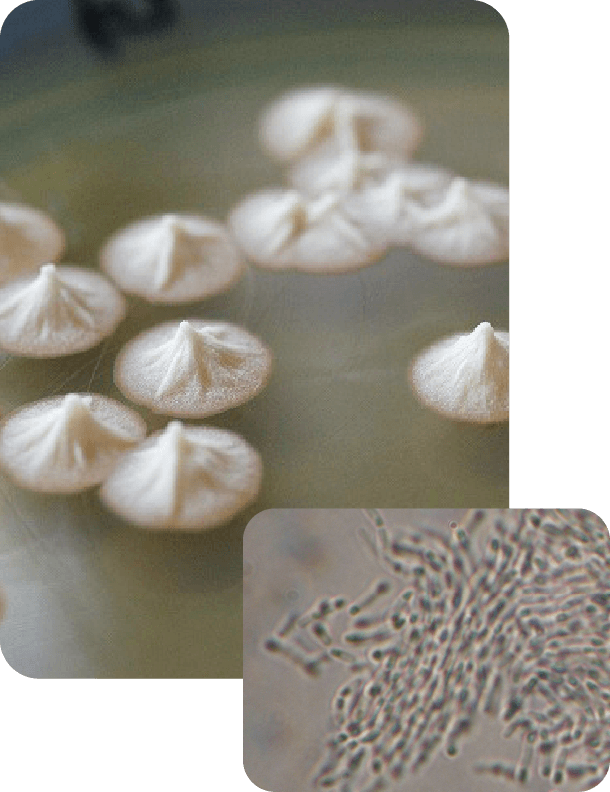
Sonomono Natto Bacteria (Natto Bacteria SONOMONO strain: Bacillus subtilis var. natto SONOMONO) is a high-quality bacterial strain that has been naturally preserved and passed down for generations by a traditional natto manufacturer with more than 60 years of history, without any genetic modification. Through ongoing research and development in cooperation with the natto manufacturer, we selected this strain based on its compatibility with “Fukuyutaka” soybeans grown in Kohoku Town, Saga Prefecture.
Learn more about Sonomono Natto Bacteria here
We conducted a large-scale human clinical study involving 205 participants, and the results were published in the peer-reviewed international scientific journal Nutrients (2022).
The study produced scientific findings demonstrating the potential of sonomono Natto Bacteria, including differences in patterns of change in the gut microbiota by participants’ sex and dietary habits.
Conducting a human clinical study of this scale using natto powder and publishing the results in a peer-reviewed international scientific journal is one of our key distinguishing features.
Sonomono Natto Bacteria, the core ingredient of our products, has been developed through many years of research and development with the goal of supporting daily health maintenance.
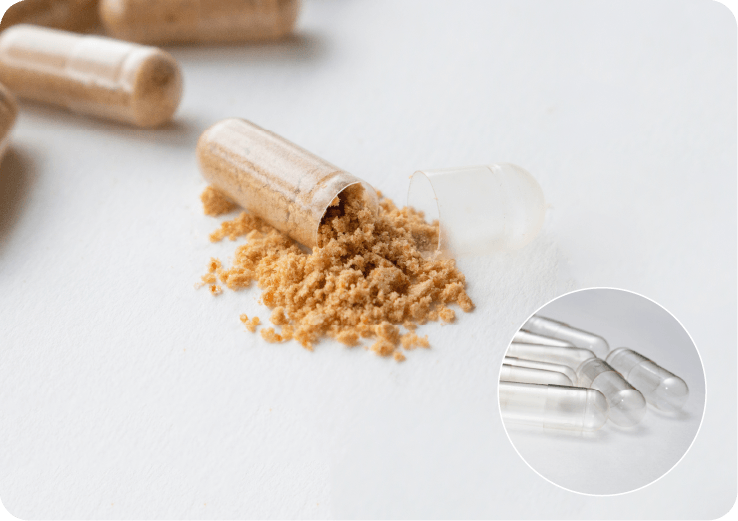
The “sonomono Natto” capsules use plant-based hard capsules made primarily from plant-derived hydroxypropyl methylcellulose (HPMC).
T
The capsules contain no animal-derived ingredients and no preservatives. They are also water-soluble, offering a clean and straightforward capsule formulation while helping preserve the quality of the natto powder within.
Quality and safety are at the heart of our manufacturing standards. Our capsules meet applicable standards of the Japanese Pharmacopoeia and are manufactured in facilities operating in accordance with FDA cGMP and KGMP standards, supporting consistent quality and reliable manufacturing.
Choosing plant-based capsules also makes “Sonomono Natto” an option for people with diverse dietary practices, lifestyles, and religious considerations. From the capsule material to the product it contains, we carefully select every component with one goal in mind: to deliver the quality of our natto in a capsule we can stand behind.
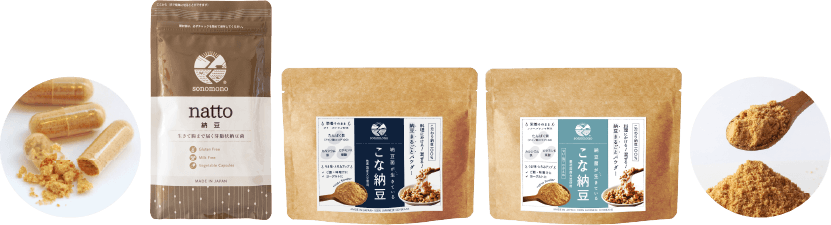
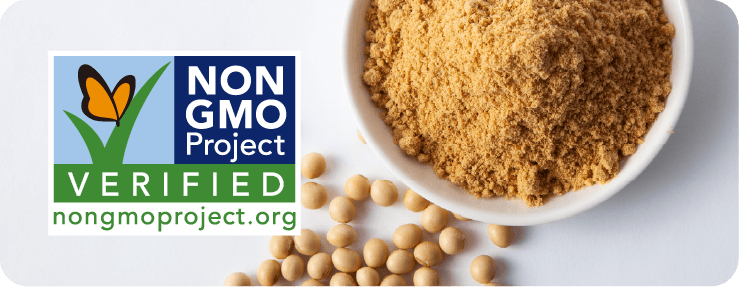
Our three flagship products have officially achieved The Non-GMO Project Verified status, demonstrating our commitment to ingredient integrity, supply chain transparency, and rigorous quality standards.
The Non-GMO Project is one of North America’s most recognized non-GMO verification programs. Products undergo rigorous third-party verification across the supply chain, from the sourcing of raw materials through the manufacturing process, to ensure compliance with established non-GMO standards.
On May 26, 2026, our three flagship products, sonomono Natto Capsules, Kona Natto Original, and Kona Natto Mild (Reduced Odor & Stickiness), completed the verification process and received The Non-GMO Project Verified status.
This achievement provides independent verification of our commitment to non-GMO standards and responds to growing consumer expectations for food integrity, transparency, and traceability in North America and other international markets.
As we expand our presence both in Japan and overseas, we remain committed to maintaining rigorous quality management practices and building a reliable supply chain in line with internationally recognized standards.
| Product | Certificate Number |
|---|---|
| Natto Powder Capsules | C-677677-2026 |
| Natto Powder Classic Flavor | C-677675-2026 |
| Natto Powder Mild Flavor | C-677673-2026 |
Our products meet the stringent standards established in Japan for foods to which the infant food radioactive-substance standards apply.
In Japan, foods intended for infants are subject to a stricter standard for radioactive cesium than general foods. While the standard for general foods is 100 Bq/kg or less, the standard for foods for infants is set at 50 Bq/kg or less—half the limit for general foods.
Meeting these stringent standards reflects our commitment to rigorous quality control and food safety. The same high standards provide reassurance to consumers of all ages who choose our products as part of their daily diet.
Note: Following the June 2023 revision of the Consumer Affairs Agency’s “Food Labeling Standards Q&A,” the recommended wording for product labeling was updated from “Food Subject to Infant Food Standards” (乳児用規格適用食品) to the more precise expression: “Food to which the standards for radioactive substances applicable to infant foods under the Food Sanitation Act apply.”
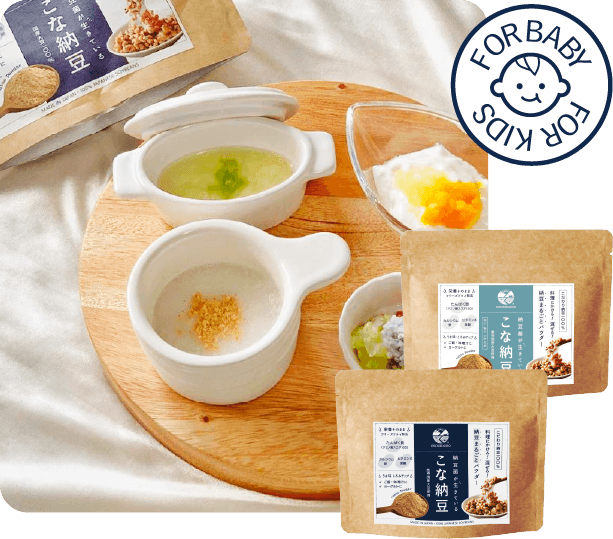
| Powdered Natto (Standard Type) | Powdered Natto (Low-odor, low-stickiness type) | |
|---|---|---|
| Cesium-134 | Not detected (lower limit: 13 Bq/kg) | Not detected (lower limit: 14 Bq/kg) |
| Cesium-137 | Not detected (lower limit: 12 Bq/kg) | Not detected (lower limit: 8.8 Bq/kg) |
To assess potential risks associated with raw materials, sonomono products undergo third-party testing for six items: cadmium, lead, arsenic, total mercury, tin, and heavy metals (as Pb).
“sonomono Natto Capsules” contains a mix of Natto Powder Standard and Natto Powder Mild (Reduced Odor & Stickiness). Accordingly, the capsule product’s test results are used as a common quality verification for all three products.
Cadmium occurs naturally in trace amounts in soil and can be absorbed by crops, including soybeans. As a result, trace amounts may naturally be present in soybean-based foods. We carefully monitor cadmium levels as part of our commitment to food safety and quality.
| Analytical Parameter | Result | Unit |
|---|---|---|
| Cadmium | 0.06 | mg/kg |
| Lead | Not detected | mg/kg |
| Arsenic | Not detected | mg/kg |
| Total Mercury | Not detected | mg/kg |
| Tin | Not detected | mg/100g |
| Heavy Metals (as Pb) | Not detected | mg/kg |
The FAO/WHO Joint Expert Committee on Food Additives (JECFA) has established a provisional tolerable monthly intake (PTMI) for cadmium of 25 μg/kg body weight per month, equivalent to approximately 0.8 μg/kg body weight per day. For an adult weighing 50 kg, this corresponds to approximately 40 μg per day.
Both amounts are less than 1% of the JECFA reference level, indicating that the cadmium contribution from a recommended serving is comparatively low.
sonomono products are manufactured at a domestic natto production and processing facility that has obtained certification of conformity with the JFS-B Standard, recognized by the Japan Food Safety Management Association (JFSM).
The JFS-B Standard incorporates three key elements of food safety management: Food Safety Management Systems (FSM), HACCP-based hazard control, and Good Manufacturing Practices (GMP). The standard references requirements established by the Global Food Safety Initiative (GFSI), providing a framework aligned with internationally recognized approaches to food safety management.
From raw material sourcing through manufacturing and shipment, we maintain rigorous quality control across the supply chain. Traceability is established throughout the production process, supporting transparency and consistent quality as our products reach customers in Japan and international markets.
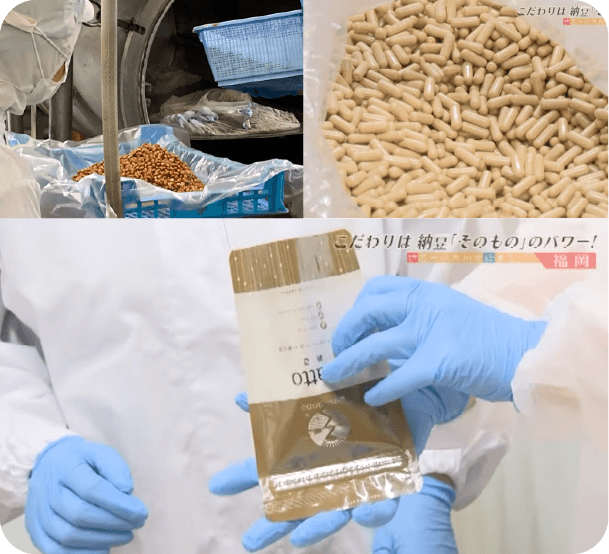
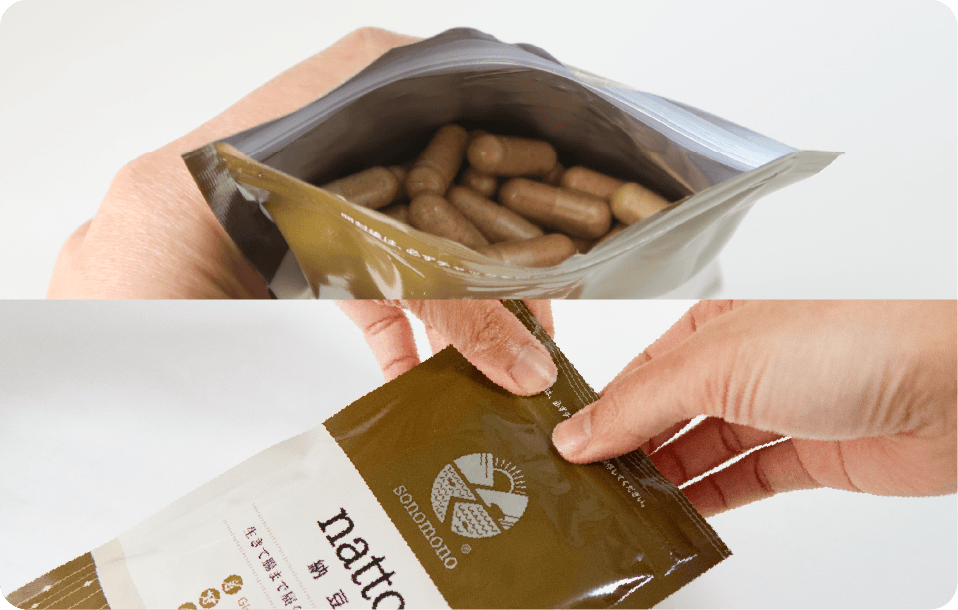
At SONOMONO, we place the same level of care into our packaging as we do into the product itself. The capsules are packaged in a multi-layer pouch incorporating aluminum foil, designed to provide a high barrier against light, oxygen, and moisture and help protect the quality of the contents.
The package features a stepped tear notch for easy, clean opening by hand, while the resealable zipper allows smooth opening and closing. The design also supports hygienic storage after opening. With universal design principles in mind, the package is designed to be easy to handle for people of different ages and with different hand preferences.
The packaging material is manufactured at a facility certified to ISO 9001, ISO 14001, and FSSC 22000, an internationally recognized food safety certification. The manufacturer has also confirmed, following an investigation, that bisphenol A (BPA) is not intentionally added or used in the material. All packaging materials comply with the applicable standards and specifications under Japan’s Food Sanitation Act.
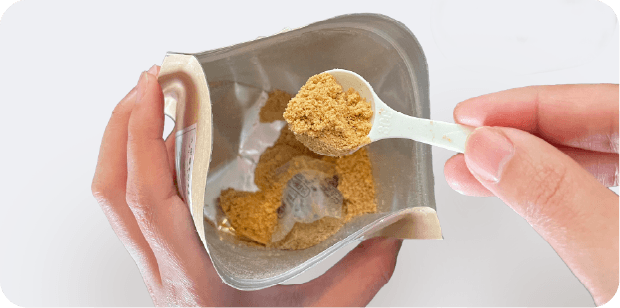
Natto Powder is packaged in a high-barrier stand-up pouch made from multiple layers, including kraft paper, aluminum foil, and PET. This multi-layer structure provides greater resistance to light, oxygen, and moisture than simple single-layer plastic packaging.
Because moisture and oxidation can directly affect the quality of a powdered product, we consider the packaging itself an essential part of protecting the product from the moment it is packaged through to everyday use.
The packaging material has also been confirmed to contain no intentional addition or use of bisphenol A (BPA) and complies with the applicable requirements of Japan’s Positive List system under the Food Sanitation Act.
Fit Keyaki 602, 2-16-6 Kego, Chuo Ward, Fukuoka, 810-0023, Japan
Customer support
Legal and Corporate Information
Ordering and Inquiries by Phone
Attention available only in Japanese.
Operating Hours: 9:00 AM to 5:00 PM(Closed on weekends and Japanese holidays)
For Media Coverage or Lecture Requests

Operating Hours: 1:00 PM to 5:00 PM (Weekdays only)※Click here for inquiries regarding business purposes.
Please input the required information and submit. We will respond from the next business day.