sonomono® Products


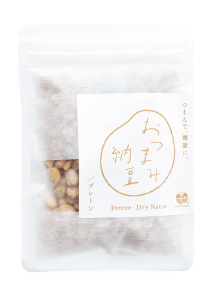
Sprinkle, mix, and enjoy!
Articles
Supervised by experts

Kazuya Ogasawara

Emi Hidaka

Sentaro Kimura
sonomono® Products
Sprinkle, mix, and enjoy!
Supervised by experts
Kazuya Ogasawara
Emi Hidaka
Sentaro Kimura

Kazuya Ogasawara
Academic Advisor to sonomoto Inc. / Former Specially Appointed Associate Professor at Kyushu University Graduate School
Mr. Ogasawara graduated from Kumamoto University Graduate School of Medical Education. He actively researches and develops functional raw materials such as nattokinase. His professional experience as a researcher over more than 39 years includes microbiology, fermentation, enzymology, and bacterium.
Press the play button ▶︎ to listen to this article.
↓↓Try it↓↓
There are many living organisms on the Earth. Some of them inhabit unbearable environments for humans. On the other hand, some creatures develop unique characteristics even though they live in the same environment as humans. Bacillus natto is a typical example.
An amazing peculiarity of Bacillus natto is having two life cycles, a vigorously growing state called “vegetative cell” and a dormant state called “spore“.
When the surrounding environment is suitable for growth, B. natto will grow steadily by dividing itself and creating new bodies. This is the “vegetative cell” cycle. Conversely, when the environment becomes unsuitable for growth, Bacillus subtilis creates a barrier called “spore” and encapsulates itself, waiting for a suitable environment to thrive.
When the B. natto reaches an environment with adequate moisture, temperature, and nutrients become, it breaks the spore and changes to a vegetative cell state. This continuous life cycle has allowed B. natto to exist for thousands of years.

The transition from ‘vegetative cell’ to ‘spores’ is not instant. When the surrounding environment becomes unsuitable for growth, some kind of trigger is pulled and the transition takes several hours. The same goes for the transition from “spores” to “vegetative cells” and it is an economical process. Instead of encapsulating its whole body with the spore, B. subtilis encapsulates only a minimum amount of genetic information and cellular material to form a new body.
Let’s have a look at the characteristics of Bacillus natto in its “vegetative cell” state. Bacillus subtilis and humans have something in common: both require air (oxygen), water, and nutrients, as well as an appropriate temperature to survive.
Bacillus subtilis requires a large amount of oxygen for growth and to sustain diverse internal processes.
Approximately 60% of Bacillus natto’s body is made of water, making it a basic survival element.
Bacillus natto is unable to create life-sustaining nutrients from scratch, it needs to obtain them for the environment. Bacillus natto secretes digestive enzymes around itself for decomposing and digesting the surrounding nutrients.
The optimal growth temperature for Bacillus natto is 30 to 45°C. Any temperature above or below this range will hinder its growth.
Bacillus natto is said to be one of the most resilient bacteria. However, if it is placed in a growth-limiting environment during the “vegetative cell” state, it will be damaged and die.

The spore stage is what gives B. natto its fame as an ultra-resilient organism.

In life-hostile environments, Bacillus natto creates a very strong outer shell called “spores” and enters a dormant state. Protected by this natural shield, this millenary probiotic will not die even when exposed to 100°C water, below 0°C environments, strong acids, and radiation (cosmic rays). While in a dormant state, B. subtilis can extend its life for decades.
While in a “sleeping” state, B. natto does not multiply or produce any substance, it just remains inert.

The natto bacteria of regular or raw natto is in a vegetative cell state.
Commercially available, regular, or raw natto contains abundant water, oxygen, and nutrients (soybeans). Therefore, Bacillus subtilis, or natto bacteria, is in a vegetative cell state. The implication is that Bacillus natto will be damaged by gastric acid and die in the stomach, limiting its ability to act as a probiotic.

However, some natto bacteria may survive because the solids and liquids of meals can reduce the direct contact of B. subtilis with stomach acid.
Also, as the fermentation increases, the likelihood of vegetative cells turning into spores. There is a slim possibility that raw natto may contain some spores too.
In conclusion, we can say the main difference between sonomono natto powder and fresh/raw natto is the Bacillus natto state. While raw natto contains mostly B. natto in a vegetative cell state, all the B. subtilis of sonomono natto powder are in “spore” form.
Kazuya Ogasawara
Academic Advisor to sonomoto Inc. / Former Specially Appointed Associate Professor at Kyushu University Graduate School
Mr. Ogasawara graduated from Kumamoto University Graduate School of Medical Education. He actively researches and develops functional raw materials such as nattokinase. His professional experience as a researcher over more than 39 years includes microbiology, fermentation, enzymology, and bacterium.

Fit Keyaki 602, 2-16-6 Kego, Chuo Ward, Fukuoka, 810-0023, Japan
Customer support
Legal and Corporate Information
Ordering and Inquiries by Phone
Attention available only in Japanese.
Operating Hours: 9:00 AM to 5:00 PM(Closed on weekends and Japanese holidays)
For Media Coverage or Lecture Requests

Operating Hours: 1:00 PM to 5:00 PM (Weekdays only)※Click here for inquiries regarding business purposes.
Please input the required information and submit. We will respond from the next business day.