sonomono® Products


Sprinkle, mix, and enjoy!
Articles
Supervised by experts

Kazuya Ogasawara

Emi Hidaka

Sentaro Kimura
sonomono® Products
Sprinkle, mix, and enjoy!
Supervised by experts
Kazuya Ogasawara
Emi Hidaka
Sentaro Kimura

As humans age, declines in physical function, organ performance, and activities of daily living have been widely reported. In practice, many older adults experience reduced physical activity as well as decreased overall movement in daily life. Alongside these changes, some older individuals intentionally limit their intake of water and other beverages in an effort to reduce urinary frequency.
At the same time, age-related cognitive decline has also been documented. In recent years, multiple medical studies have reported a potential association between reduced fluid intake and declines in cognitive function.
Water accounts for approximately 55–60% of the human body and is an essential component for maintaining physiological balance. Estimated daily water requirements, including water obtained from food, are approximately 2.3–2.5 liters per day for individuals with low activity levels and 3.3–3.5 liters per day for those with higher activity levels.
Because these estimates include water derived from food, it is generally recommended that people consume about 1.5 liters of drinking water per day to maintain adequate hydration.
A research group led by Dr. Hideyuki Hoshi at Hokuto Hospital (Hokkaido, Japan) investigated the effects of fluid intake on dementia risk in 33 Japanese older adults residing in long-term care facilities.
The study reported that when daily fluid intake was below 42 mL per kilogram of lean body mass (LBM), changes in cognitive performance—measured using the MMSE-J score—were observed. In addition, associations were found between fluid intake levels and cerebral hemodynamics (brain blood flow).
The authors concluded that “adequate fluid intake showed a linear association with improvements in cognitive function, and this effect may be mediated through cerebral blood flow dynamics.”
In other words, maintaining sufficient hydration may support normal cerebral blood circulation and potentially help mitigate age-related cognitive decline.

Beyond hydration alone, attention has also focused on beverages that provide both fluids and bioactive compounds—particularly green tea.
A research team led by Dr. Shutaro Shibata from the Department of Neurology at Kanazawa University examined data from the JPSC-AD Study, a large dementia cohort in Japan. The analysis included 8,766 individuals without dementia who had available brain MRI data. Researchers evaluated associations between coffee and green tea consumption and brain white matter lesions, hippocampal volume, and total brain volume.
Participants were categorized into four groups based on daily intake:
The results showed that higher green tea consumption was associated with smaller volumes of cerebral white matter lesions. No significant associations were observed between green tea intake and hippocampal or total brain volume. Coffee consumption showed no association with any of the brain measures evaluated.
The authors suggested that epigallocatechin gallate (EGCG)—a polyphenol found in green tea—may contribute to these findings through its antioxidant and blood pressure–lowering effects. Because white matter lesions are closely linked to both vascular dementia and Alzheimer’s disease, the researchers proposed that green tea consumption may play a role in dementia prevention.
In another long-term study, a research group led by Riku Kaise at Niigata University reported findings from a 12-year cohort study examining green tea intake and dementia risk among middle-aged and older Japanese adults.
The study followed 13,660 individuals aged 40–70 years (6,573 men and 7,087 women). Results showed a dose-dependent reduction in dementia risk with higher green tea consumption. Each additional cup of green tea (150 mL) per day was associated with a 4.8% reduction in dementia risk.
The study also examined interactions between green tea and coffee intake but found no additional risk reduction when both were consumed at high levels. The authors also cautioned against excessive consumption, emphasizing moderation.
A systematic review conducted by Shiyao Zhou and colleagues at Macau University of Science and Technology analyzed studies published between September 2004 and September 2024 on green tea intake and cognitive decline.
This meta-analysis included 18 studies involving 58,929 participants. The results confirmed an association between green tea consumption and reduced risk of cognitive decline in both men and women, with the strongest effects observed in individuals aged 50–69 years.
Notably, a significant reduction in cognitive decline risk was observed in Asian populations, while similar effects were not confirmed in European populations.
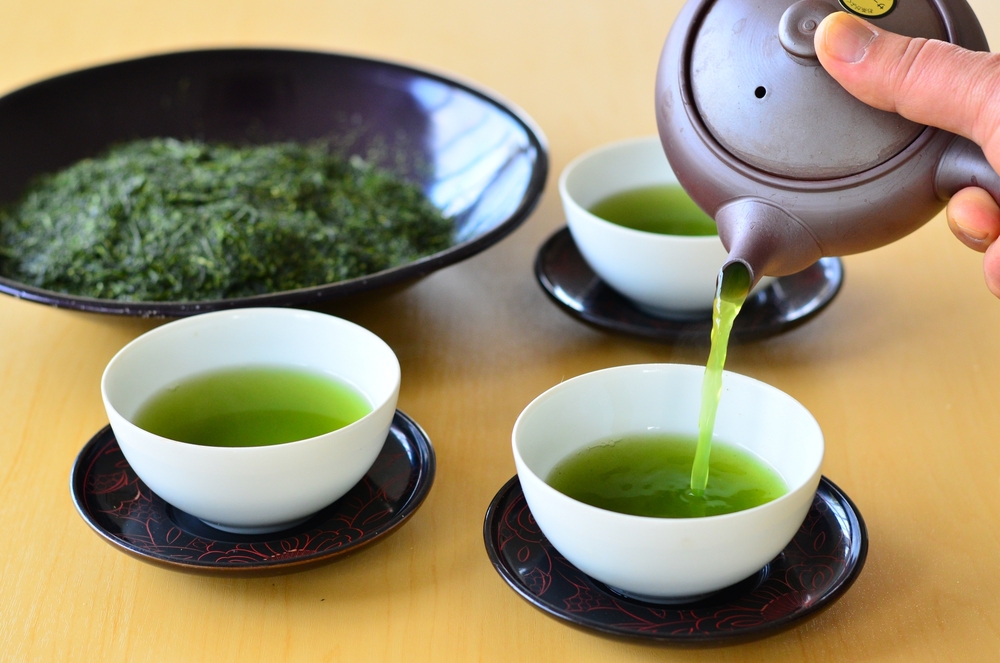
The following perspective reflects the author’s interpretation. One possible reason why benefits were not observed in European populations may be lower habitual green tea consumption. Functional food components typically require consistent, long-term intake to produce measurable effects, rather than short-term or occasional consumption.
Regular intake at appropriate levels, beginning earlier in life, may be more effective in supporting long-term cognitive health.
Overall, current evidence suggests that both adequate hydration and regular green tea consumption may contribute to reducing dementia risk.
With growing global interest in green tea, including increased visibility through international marketing and popular culture, further research is expected to expand worldwide. Continued scientific investigation will help clarify its role in cognitive health and aging.
参考文献
1) 高Physical Characteristics of the Elderly, Health and Longevity Network: Foundation for Longevity Science
https://www.tyojyu.or.jp/net/kenkou-tyoju/kenkou-undou/shintaiteki-tokucho.html
2) How much water should I drink per day? Health and Longevity Network: Public Interest Foundation for Longevity Science
https://www.tyojyu.or.jp/net/kenkou-tyoju/shokuhin-seibun/water.html
3) H. Hoshi, et al. Effect of fluid intake on cognitive function in older individuals: A prospective study, PloS One. 2025;20(10);e0333793. pil: e0333793.
4) S. Shibata, et al. Greentea consumption and cerebral white matter lesions in community-dwelling older adults without dementia, npj Science of Food. (2025)9 :2. https://doi.org/10.1038/s41538-024-00364-w
5) R. Kaise, et al. Green tea consumption and dementia risk in community-dwelling Japanese people aged 40–74 years: A 12-year cohort study, The Journal of Nutrition, Health and Aging. 29 (2025) 100615. http://doi.org/10.1016/j.jnha.2025.100615
6) S. Zhou, et al. The Association between Green Tea Consumption Cognitive Function: A Meta-Analysis of Current Evidence, Neuroepidemiology, DOI: 10.1159/000543784

小笠原 和也
そのもの株式会社学術顧問/元九州大学大学院 農学研究院 特任准教授
熊本大学大学院医学教育部卒。 ナットウキナーゼをはじめとする機能性⾷品原料の研究開発、 39年間にわたる納⾖菌を主とする微⽣物学・醗酵学・酵素学の研究開発の経験をもとに幅広く活躍中。

Fit Keyaki 602, 2-16-6 Kego, Chuo Ward, Fukuoka, 810-0023, Japan
Customer support
Legal and Corporate Information
Ordering and Inquiries by Phone
Attention available only in Japanese.
Operating Hours: 9:00 AM to 5:00 PM(Closed on weekends and Japanese holidays)
For Media Coverage or Lecture Requests

Operating Hours: 1:00 PM to 5:00 PM (Weekdays only)※Click here for inquiries regarding business purposes.
Please input the required information and submit. We will respond from the next business day.