sonomono® Products


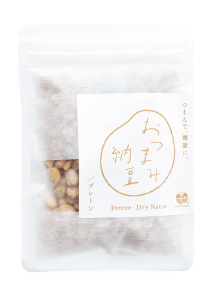
Sprinkle, mix, and enjoy!
Articles
Supervised by experts

Kazuya Ogasawara

Emi Hidaka

Sentaro Kimura
sonomono® Products
Sprinkle, mix, and enjoy!
Supervised by experts
Kazuya Ogasawara
Emi Hidaka
Sentaro Kimura
Part 1 of “The Natto Stories” Series
Let’s Start With a Quick Question!
Bacillus subtilis (natto bacteria) and soybeans.
That’s the standard recipe for itohiki natto — the sticky, stringy, and pungent fermented food loved in Japan and gaining fans worldwide for its incredible probiotic benefits. But here’s a question that surprises many
Many health-conscious eaters and food innovators have wondered:


The short answer: No, at least, not successfully.
Over 30 years ago, as a curious college student, I experimented by trying to ferment various beans with Bacillus subtilis natto. I tested:
No matter the bean variety, the fermentation failed to produce real natto.
Soybeans (Glycine max) belong to the Fabaceae family, Glycine genus, and contain specific nutrients and amino acids that Bacillus subtilis depends on to thrive and ferment.
Other legumes belong to different genera and species, meaning their biological makeup is incompatible. In fact, they may contain compounds that inhibit the growth of B. subtilis or interfere with the fermentation process.
“Soybeans aren’t just convenient — they’re biologically perfect for natto.”
There’s no published research yet to confirm which compounds make soybeans so effective, but decades of industrial experience suggest soy contains unique fermentation-enabling molecules that no other legume offers.
When Bacillus subtilis successfully ferments soybeans, it creates powerful functional ingredients like:
These are the same compounds that make natto one of the most respected functional superfoods in Japan.
Many supplement manufacturers use Bacillus subtilis not to make natto, but to extract nattokinase, vitamin K2, and other compounds at scale.
Even in controlled industrial fermentation, soybeans remain the #1 growth medium for B. subtilis. No other bean has proven more effective for consistent, high-quality probiotic production.
Hundreds of years ago, somewhere in ancient Japan, Bacillus subtilis encountered soybeans, and natto was born.
This chance meeting between microbe and legume led to a health food rich in tradition, taste, and science-backed benefits.
Despite the growing popularity of alternative beans and plant-based innovations, soybeans are still unmatched when it comes to fermenting true, probiotic-rich natto.
If you’re looking for real natto, plenty of Bacillus subtilis var. natto, plus nattokinase and vitamin K2, traditional natto made from soybeans is still the gold standard. Other beans might ferment, but they simply can’t match the benefits, taste, and texture of authentic Japanese natto.
And this is just the beginning.
? In our next article in The Natto Stories series, we’ll explore the science and history behind natto.
Stay tuned, the world of natto is more fascinating than you think.

Kazuya Ogasawara
Academic Advisor to sonomoto Inc. / Former Specially Appointed Associate Professor at Kyushu University Graduate School
Mr. Ogasawara graduated from Kumamoto University Graduate School of Medical Education. He actively researches and develops functional raw materials such as nattokinase. His professional experience as a researcher over more than 39 years includes microbiology, fermentation, enzymology, and bacterium.

Fit Keyaki 602, 2-16-6 Kego, Chuo Ward, Fukuoka, 810-0023, Japan
Customer support
Legal and Corporate Information
Ordering and Inquiries by Phone
Attention available only in Japanese.
Operating Hours: 9:00 AM to 5:00 PM(Closed on weekends and Japanese holidays)
For Media Coverage or Lecture Requests

Operating Hours: 1:00 PM to 5:00 PM (Weekdays only)※Click here for inquiries regarding business purposes.
Please input the required information and submit. We will respond from the next business day.